Table of contents
- 01How does commercial junk removal work in Dubai?
- 02What types of commercial properties and items do we clear?
- Corporate offices and serviced suites
- Retail shops and showrooms
- Warehouses and industrial facilities
- 03Commercial junk removal vs DIY: comparing business options
- 04Navigating Dubai building management and service lift rules
- 05How should businesses prepare for a landlord handover inspection?
- 06Common mistakes businesses make during commercial cleanouts
- 07What factors influence commercial junk removal pricing?
- 08What happens to commercial items after collection?
- 09Book commercial junk removal in Dubai today
Key takeaways
- Commercial junk removal in Dubai covers offices, retail shops, restaurants, warehouses and commercial premises undergoing fit-outs, handovers or relocations.
- Commercial jobs require coordination with building management for service lift bookings, loading bay access, and security permits.
- Materials are sorted for recycling whenever possible, including cardboard, metals, office furniture and plastics, with residual waste handled responsibly.
- Pricing depends on volume, material types, access restrictions, and scheduling. Send photos on WhatsApp for clear pricing before work starts.
A retail store in JLT preparing to hand keys back to the landlord, a corporate firm in Business Bay upgrading to modular workstations, or a logistics bay in Al Quoz clearing broken pallets all face the same challenge. Unwanted items must be removed quickly, safely, and without disrupting normal business. Handling commercial junk removal in Dubai requires more than a standard van. It demands coordinated loading bay access, compliance with tower management rules, and dependable crews who handle heavy lifting efficiently.
Whether you are preparing a commercial tenancy handover, clearing out decommissioned retail displays, or disposing of redundant office desks, our professional commercial waste management in Dubai ensures your premises are cleared on schedule.
How does commercial junk removal work in Dubai?
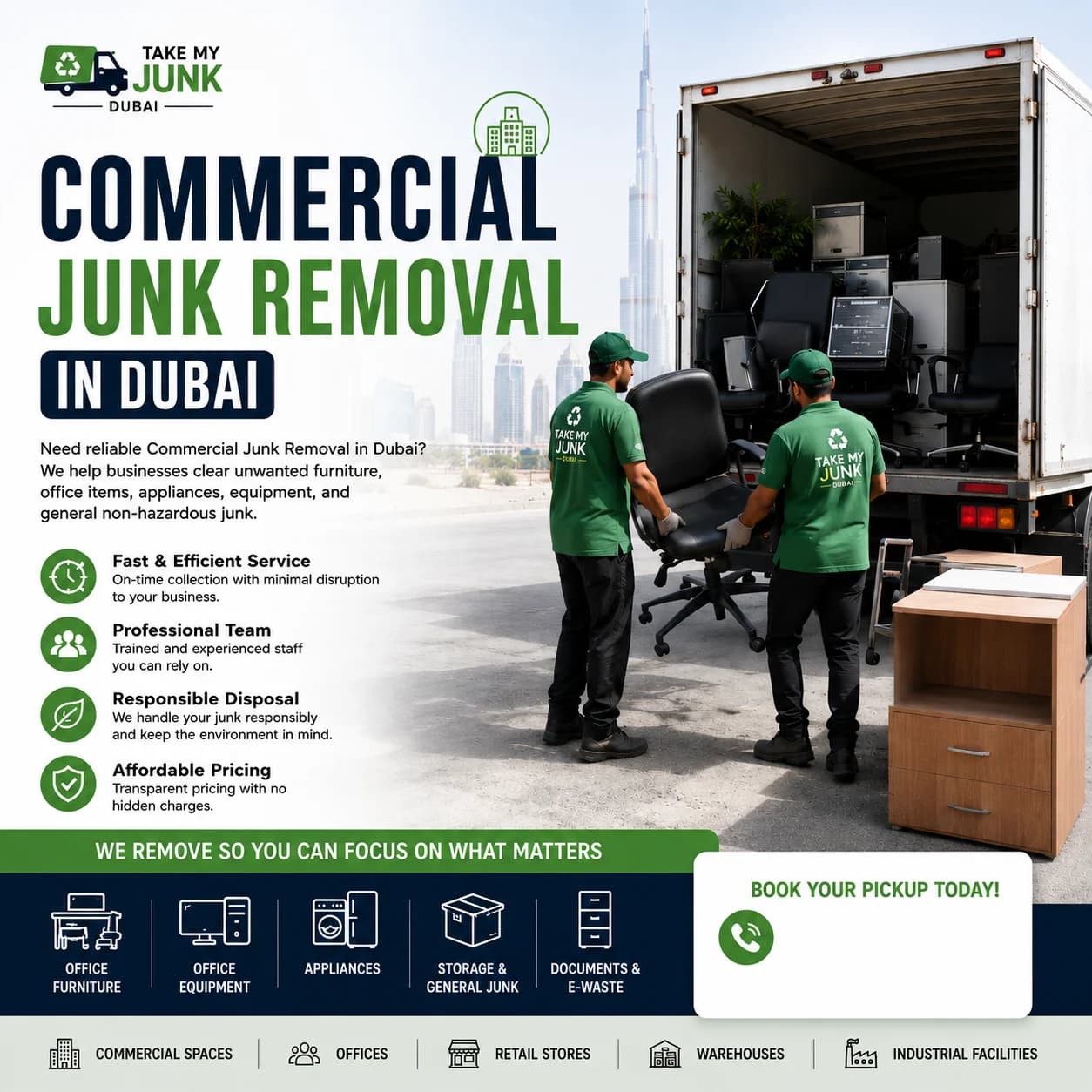
Send photos of the items to be removed, receive clear pricing upfront, and our crew coordinates collection around your operational schedule. Here is how our commercial removal process runs from start to finish:
- Send photos and site details: Share photos of the furniture, fixtures, or materials needing clearance via WhatsApp, along with your building location and floor level.
- Clear pricing before work begins: We evaluate the volume, access conditions, and labor requirements, providing clear pricing before any work starts.
- Building access and schedule coordination: We confirm collection times that suit your operating hours and match your property management's loading dock access windows.
- On-site dismantling and loading: Our team arrives with the necessary tools, dismantles bulky items if needed, and transports everything through designated service elevators to the loading bay.
- Responsible sorting and recycling: All collected materials are taken to approved facilities where cardboard, metal, wood, and plastics are sorted for recycling whenever possible.
If your project involves complete desk systems and conference setups, our specialized office clearance guide provides step-by-step guidance for corporate workspace transitions.
What types of commercial properties and items do we clear?
Commercial premises generate a diverse mix of unwanted assets, bulky furniture, and operational waste. We handle cleanouts across several sectors:
Corporate offices and serviced suites
Office refurbishments and downsizing leave behind substantial furniture inventories. We remove:
- Workstations, executive desks, and ergonomic task chairs
- Meeting room tables, reception counters, and visitor seating
- Metal filing cabinets, credenzas, and storage pedestals
- Breakroom appliances including refrigerators, microwaves, and water dispensers
- Packaging cardboard, presentation boards, and partitioned cubicle panels
Retail shops and showrooms
Retail spaces in shopping malls and street-level plazas operate under strict lease handover deadlines. We clear:
- Display racks, shelving units, cash wraps, and checkout counters
- Mannequins, fitting room partitions, and promotional stands
- Surplus cardboard boxes, crating, and plastic protective wrapping
- Obsolete point-of-sale display fixtures and non-structural shelving
Warehouses and industrial facilities
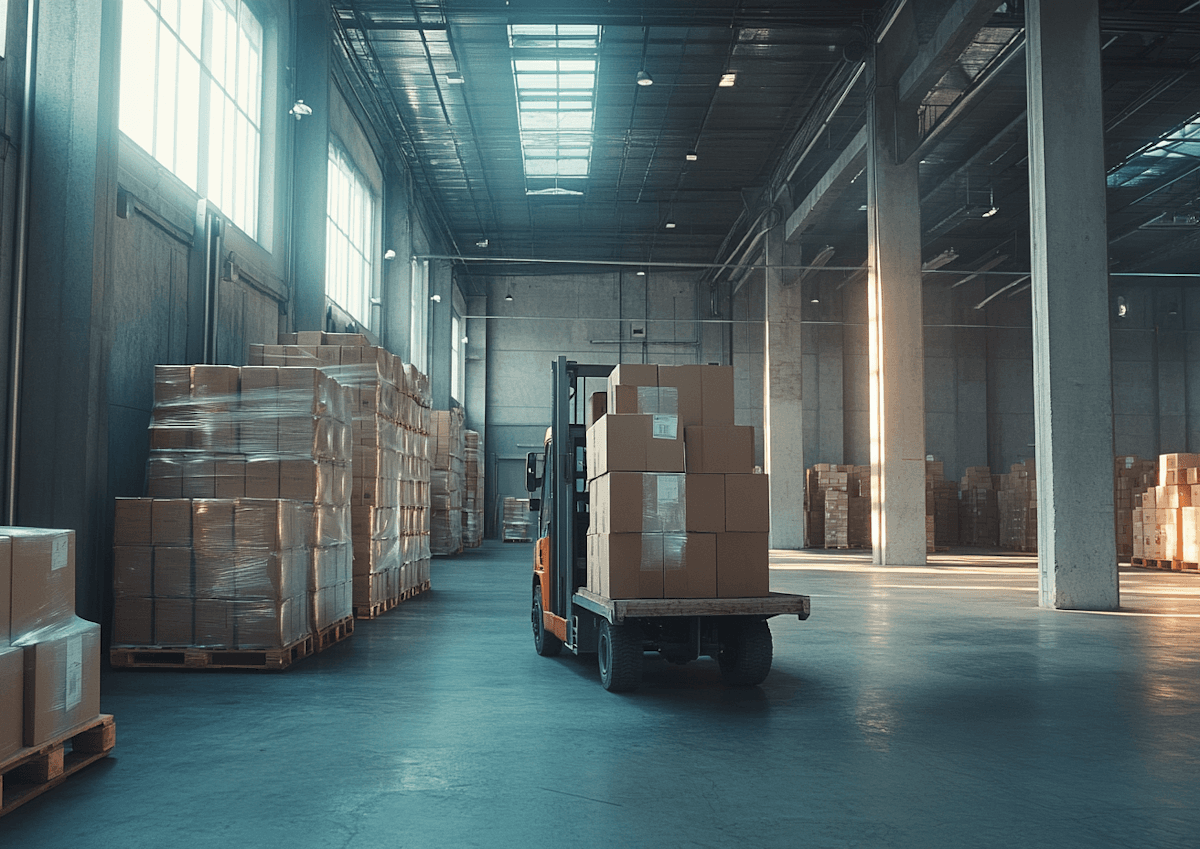
Storage facilities accumulate operational debris and surplus infrastructure over time. As outlined in our warehouse clearance guide, we clear:
- Wooden and plastic transport pallets
- Freestanding industrial shelving and metal racking components
- Packaging waste, stretch film, and corrugated cardboard
- Scrap metal offcuts and decommissioned non-hazardous machinery
Important: Hazardous chemicals, raw paints, industrial solvents, gas cylinders, and medical waste cannot be accepted. These materials require licensed hazardous waste contractors in accordance with Dubai Municipality environmental directives.
Commercial junk removal vs DIY: comparing business options
Businesses sometimes evaluate whether internal facilities teams should handle a clearance or hire a third-party commercial waste collection service.
| Factor | Internal staff handling | Professional commercial service |
|---|---|---|
| Staff productivity | Pulls employees away from their primary commercial duties | Zero impact on regular business workflows |
| Physical safety | Risk of manual handling injuries from heavy office furniture | Experienced crews trained in safe lifting techniques |
| Transportation | Requires renting pickup trucks or flatbeds | Dedicated commercial vehicles provided |
| Building compliance | Staff must manage building security passes and dock rules | Team coordinates logistics with property management |
| Disposal compliance | Staff must locate approved sorting and recycling yards | Handled through authorized recycling and waste channels |
| Speed | Often takes multiple days across several trips | Usually completed within a single dedicated visit |
Navigating Dubai building management and service lift rules
Commercial towers in major business districts such as Downtown Dubai, Business Bay, and DIFC enforce strict operational guidelines for moving large items.
Key building management factors include:
- Service elevator bookings: Passenger lifts cannot be used for freight. Service lifts must be reserved in advance through the building management portal.
- Move-out permits and NOCs: Many commercial landlords require an approved move-out form confirming that common areas will be protected during clearance.
- Security clearance for contractor teams: Security offices require vehicle plate numbers and driver identity details prior to granting gate access.
- Restricted working hours: Loading bays in central districts frequently restrict noisy work and bulky loading to early morning hours or weekends.
Tip: Inform your building management office at least 48 to 72 hours before your scheduled clearance to confirm that your service elevator reservation and security gate passes are approved.
How should businesses prepare for a landlord handover inspection?
A successful commercial handover in Dubai requires clearing all unapproved tenant alterations, non-structural partitions, and loose furnishings before the final inspection. Dubai landlords and facility management firms (including TECOM, Emaar, and private asset managers) enforce strict reinstatement guidelines before refunding security deposits.
To ensure your premises pass handover inspections:
- Distinguish tenant fixtures from landlord base build: Ensure lighting, perimeter skirting, and base electrical panels installed by the building remain untouched while demountable partitions and custom branding displays are cleared.
- Inspect service paths and walls: Heavy furniture removal can accidentally scuff elevator surrounds or hallway walls. Our crew uses protective blankets and careful maneuvering to safeguard common areas.
- Check ceiling voids and server cabinets: Remember to clear redundant network cabling, power extension strips, and disused server racks that facility inspectors often flag during walk-throughs.
- Clear basement storage bays: Many Dubai commercial leases include basement store cubicles. Ensure all old trade show stands, archived promotional material, and seasonal equipment are completely emptied.
Common mistakes businesses make during commercial cleanouts
Avoiding these frequent oversights will save your facilities team substantial time and prevent project delays:
- Underestimating the total disposal volume: Workspaces accumulate substantial loose materials over lease terms. Providing photos of all storage cupboards, server rooms, and under-desk areas ensures an accurate initial assessment.
- Waiting until the final lease day: Attempting a full office or retail clearance on the day keys are due leaves no margin for unexpected elevator maintenance or gate pass delays. Plan clearance 3 to 5 days before your official handover date.
- Mixing hazardous items with general waste: Leaving old fluorescent tubes, printer toner bulk cartridges, or paint cans among office desks will stall collections, as these require segregated disposal channels.
- Failing to register contractor gate passes early: Security at major commercial hubs (such as DIFC or Dubai Silicon Oasis) will turn vehicles away if trade license copies and driver ID submissions are delayed.
What factors influence commercial junk removal pricing?
Commercial removal pricing in Dubai is determined by measurable operational factors rather than fixed flat rates:
- Total volume and truck space: The overall space required in commercial collection vehicles.
- Weight and density: Heavy steel filing cabinets, dense timber, or ceramic fixtures require greater labor and transport capacity than light packaging.
- Dismantling complexity: Large executive desks, modular workstations, or boltless warehouse shelving requiring disassembly on site.
- Access and horizontal carry: The distance from your office suite or store entrance to the service lift and loading bay.
- Timing requirements: Emergency handovers or specialized night-shift collections that require dedicated off-hours staffing.
To receive an exact price for your property clearance, send clear photos or a short video walkthrough on WhatsApp to +971 55 765 1866.
What happens to commercial items after collection?
All materials collected during commercial cleanouts are transported to licensed waste management and sorting facilities. In accordance with Dubai's sustainable waste initiatives, materials are segregated to divert useful resources away from municipal landfills:
- Metals: Steel desks, aluminum extrusions, and iron frames are separated for metal reclamation.
- Cardboard and paper: Shipping cartons and packaging are baled and sent to local paper mills for repulping.
- Wood: Untreated wooden pallets and timber furniture are diverted to wood-recycling facilities for chipping or conversion.
- Plastics: Packaging films and rigid containers are sorted by polymer grade for processing.
- Residual waste: Non-recyclable composite materials are transported to designated Dubai Municipality disposal sites.
Book commercial junk removal in Dubai today
Clear your office, retail store, or warehouse space quickly and professionally. Whether you need same-day collection or a planned weekend tenancy clearance, our team provides safe heavy lifting, building management compliance, and responsible recycling across all Dubai business districts.
Contact our team today: Call or WhatsApp +971 55 765 1866, or fill in our online contact form to receive clear pricing for your commercial clearance.
Frequently asked questions
What does commercial junk removal in Dubai cover?
Commercial junk removal covers the collection, loading, and responsible disposal of unwanted furniture, equipment, fixtures, packaging, and non-hazardous materials from business properties. This includes corporate offices, retail stores, food and beverage outlets, and industrial warehouses across Dubai. Our crew handles all lifting and transport directly from your premises.
Can collections be scheduled outside standard business hours?
Yes. Many commercial towers in Business Bay, Downtown Dubai, and DIFC permit heavy loading only during evenings, early mornings, or weekends. We schedule commercial collections to match your building management's permitted work windows so daily business operations for your staff and neighboring tenants remain uninterrupted.
Do you provide documentation or permits for building management?
Yes. Commercial properties and managed towers in Dubai frequently require contractor trade licenses, vehicle details, driver Emirates IDs, and work notification forms before granting loading bay access. We provide the necessary operational documentation to help you secure building management NOCs and move-out clearances.
How is pricing calculated for commercial junk removal?
Pricing is based on the total volume of waste, item weight, dismantling requirements, and property access logistics such as loading dock distances or service elevator availability. We confirm clear pricing before work begins so there are no surprises on collection day. Send photos on WhatsApp for an assessment.
What materials cannot be collected during commercial clearance?
We do not collect hazardous waste, including industrial chemicals, paints, motor oils, asbestos, medical waste, or bulk commercial batteries. These substances require specialized industrial handling under specific Dubai Municipality environmental regulations and must be processed by licensed hazardous waste specialists.

Written by the Shanan Junk Removal team
We remove household junk, furniture, appliances, construction debris and garden waste for homes and businesses across Dubai, from our base in Al Quoz.
About us